Showing posts sorted by relevance for query Flat error. Sort by date Show all posts

Tuesday, October 04, 2005

The Flat Earth

It's an enduring myth that before the Enlightenment people used to think the earth was flat. One would think that progressives would question historians who would record themselves as part of Enlightenment and the ages before them as the Dark Ages, yet they don't. Progressives are typically too busy progressing on to their next mistake to become aware of those they have already made.
According to Jeffrey Russell’s timely investigation, th[e] flat-earth legend arose in 1828 with Washington Irving’s semifictionalized biography of Columbus and was enhanced by similar efforts by the French historian Antoine-Jean Letronne. The brilliantly described encounter between Columbus and the flat-earth zealots of the Spanish Inquisition, made up out of whole cloth by the American novelist, played into the hands of John William Draper and Andrew Dickson White, who were looking for evidence of dogmatic and clerical opposition to the forces of rationality.

In our own century, students of medieval science have demonstrated the flimsiness of the flat-earth mythology, so that Admiral Samuel Eliot Morison could dismiss the argument by stating simply, “No flat earth theory, certainly; for of all the vulgar errors connected with Columbus, the most persistent and the most absurd is that he had to convince people ‘the world was round.’ Every educated man in his day believed the world to be a sphere, every European university so taught geography, and seamen ... knew perfectly well that the surface of the globe was curved.”

Nevertheless, Daniel Boorstin in The Discoverers entitles a chapter “A Flat Earth Returns,” though his presentation seems not quite as egregious as Russell would have us believe. Clearly, the myth is still rampant, as Inventing the Flat Earth demonstrates in a series of contemporary citations. Russell’s short account is a pleasant antidote to such historical nonsense.
(Reviewed: Inventing the Flat Earth: Columbus and
Modern Historians by Jeffrey Burton Russell
Speculum Vol. 68, No. 3 (Jul., 1993), :885)


Myths:
In Galileo's day public opinion largely adhered to the "flat-earth" view taught by the Church and few were willing to risk death by openly challenging biblical writings with scientific analysis. We now know the public's view was all wrong, but public opinion is understandably susceptible to error. In the past 400 years some things haven't changed. A few members of the Dover School Board have recently called for the teaching of biblical creationism as part of the high school's biology curriculum. Despite U.S. Supreme Court rulings that creationism is not science and thus, teaching it violates the constitutional separation of Church and State, the creationism proponents want it taught along side the Darwinian theory of evolution anyway.

(The York Dispatch (York, PA)
June 18, 2004 Friday Section: Letters
Headline: Creationism has problems
By Steven G. Zorbaugh)

The bad thing about progressives is that they are ignorant people who think that they know something. There are three or four myths in that letter, which is typical, and murmuring about science, science...cannot change historical facts. The interesting thing is that people seem to be learning progressive or Leftist myths from American professors who are supposed to engage in critical thinking enough to know better.

Tuesday, October 11, 2005

Columbus Day, a day late...and not much about Colombus anyway

An interesting book: (Inventing the Flat Earth: Colombus and Modern Historians, By Jeffrey Russel)

A contradictory history was invented based on the typical practice of projecting the present or whatever concerns one might have in the present onto the past, so progressive charlatans who defined themselves as enlightening made up stories about the past. On the proliferation of these myths:

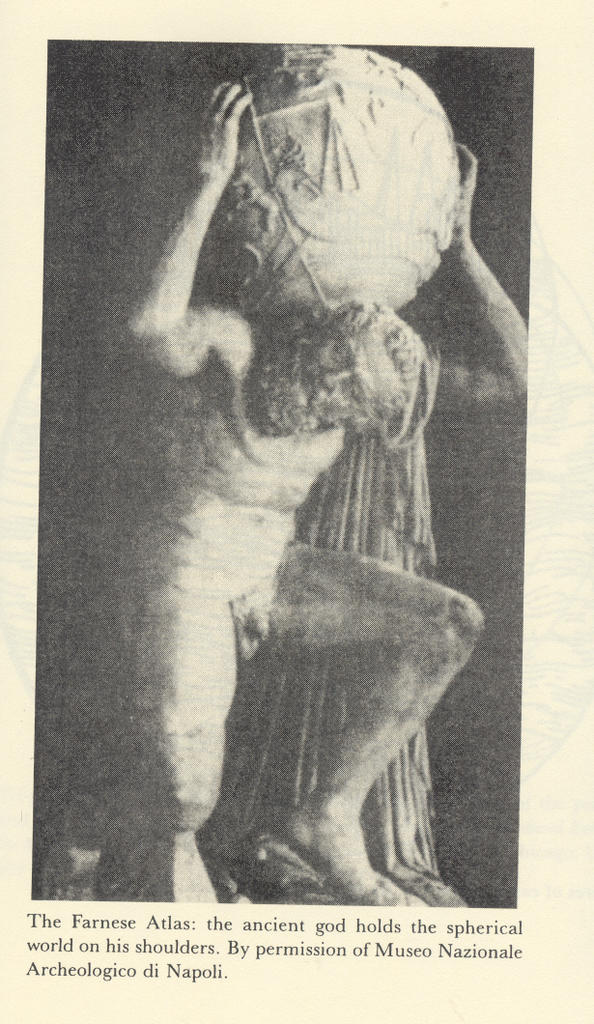
Another version of the Error is that the ancient Greeks may have known that the world was round, but the knowledge was lost (or suppressed) in medieval darkness. According to this argument, the Middle Ages were a dark period for the development of science in Europe. At best, scholars made accurate but sterile copies of the works of the ancients, rejecting anything that did not conform with the dogmas of the Church. Such an intellectual environment stifled any development of scientific analysis. Concepts of the world that had been developed in ancient times were reshaped to conform to the teaching of the Church. The earth became a flat disc with Jerusalem at its center.

This line of thought, presented in 1988, represents no advance in knowledge from the following statement, made sixty years earlier:

The maps of Ptolemy. . were forgotten in the West for a thou sand years, and replaced by imaginary constructions based on the supposed teachings of Holy Writ. The sphericity of the earth was, in fact, formally denied by the Church, and the mind of Western man, so far as it moved in this matter at all, moved back to the old confused notion of a modulated “flatland,” with the kingdoms of the world surrounding Jerusalem, the divinely chosen centre of the terrestrial disk.

(Inventing the Flat Earth: Colombus and Modern Historians
By Jeffrey Russel: 28-29)

That's pretty much all false. What I find interesting is that in this version of the myth of the Flat Earth Error progressives do not deal with the fact of ancient knowledge and the question of its origins. Despite the modernist prejudice against them the ancients seemed to have more astronomical knowledge than they should have had. An example, the number of celestial bodies in our solar system is about twelve (given the recent discovery of another planet) and if the moon is counted as a celestial body then it is already twelve planets or bodies which seem to be symbolized in the ancient signs of the zodiac. There is one rather odd fellow who may have read one too many Sumerian texts who predicts a last planet that will pretty much bring about the end of the world.

Some more of the current "kooky" books on my booklist:
(Underworld : The Mysterious Origins of Civilization
by Graham Hancock)
(The Mars Mystery : The Secret Connection Between Earth and the Red Planet
by Graham Hancock)
(The Message of the Sphinx : A Quest for the Hidden Legacy of Mankind
by Graham Hancock)
(The Sirius Mystery : New Scientific Evidence of Alien Contact 5,000 Years Ago
by Robert Temple)

Looks like they may be a little kooky and suffer from the mental patterns typical to conspiracy theorists but I don't care if an author tends that way a little bit, as long as they bring up some interesting anomalies or evidence to think about. Ironically according to Darwinists any anomalies or challenges to current mythological narratives of Naturalism are probably just like believing the earth is flat or somethin', which is just like they did in the Dark Ages before the great Enlightenment and so on. What brings all these claims together is a grand mythology of Progress just like grand Conspiracies are imagined by some, in both cases it matters little what historical and empirical evidence actually are and in both cases some empirical and historical evidence can be salvaged if the mythology and so on is discarded.