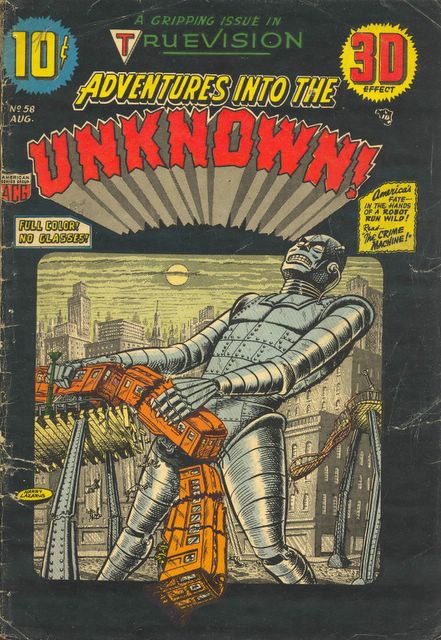
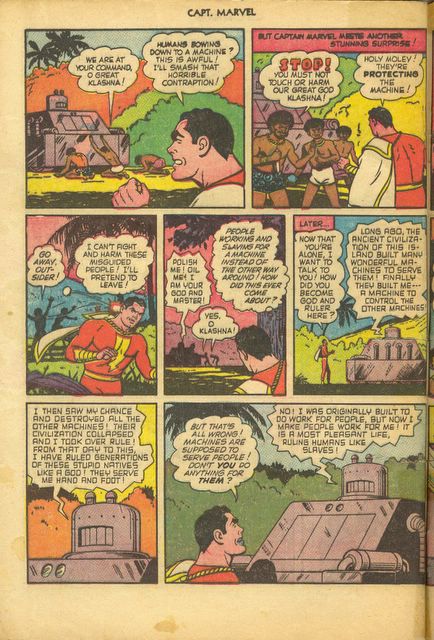
Nearly 4 billion years ago, in the violent millennia of the Hadean world, some organic molecules achieved the ability to make more of themselves from the simpler chemical substances of the primeval seas in which they occurred. This ability to self-replicate at the expense of the environment was the beginning of life on earth. Life itself involves a conflict between two antagonistic phenomena: Self-replication can produce, in theory, an infinite number of products; yet, in reality, the world that supplies the materials for replication is finite. Life, then, is a tension between the infinite and the finite. It is inevitable that the finite prevails.
(Science as a Way of Knowing: The Foundations of Modern Biology, By John A. Moore :1)

I'll let this: "...some organic molecules achieved the ability to make more of themselves..." go for now. I'd rather look at something I mentioned in the comments section once that got wiped by switching to Haloscan, the spiritual or mystical nature of many arguments that evolutionists make. How can a Naturalist make an appeal to some non-existent "...infinite number of products..." that are supposedly in tension with "reality"? How many times has an atheistic argument against the Creator been made based on a notion of "existence" based soley on Naturalism?
Yet it seems that he rather easily discards it and makes an appeal to the infinite at a fundamental level of his philosophy. I have no trouble arguing about the reality of the metaphysical and the like. Admitting that it exists is a start. But the Naturalist seems to typically discount and discard it
totally by denying its existence, then often picks up an argument based on the metaphysical in the next breath.
Another instance of the same sort of abuse of science is tautological statements that are true by definition, untestable and unfalsifiable. I have no problem with these as a matter of truth. Example: "Those that have eyes, let them see." There are some layers of meaning there and the statement works to define itself as true. But that's not scientific. It is more poetic, which suits me fine. Yet with respect to natural selection the evolutionists are writing tautological poetry such as, "Those that survive, they're the ones that survive!" or "Survival of the fittest, that's the survival of the ones that were fit!" That's religious and poetic language apparently based on the veneration of Nature's supposed selections. Perhaps there is reason for the religious language as after all, how does Nature "select" something? Are there unnatural selections? If there are, then are the natural selections falsifiable by the unnatural selections?
Here is a good summary on natural selection, as perhaps Nature has selected some shifty arguments for evolutionists.
Formulations of natural selection fall into four groups: tautologies, special
definitions, metaphysics, and lame formulations (T, SD, M, L).
• Tautologies are not testable scientific explanations. They are definitions
masquerading as explanations.
• Special definitions are a multitude of conflicting explanations masquer-
ading as a single unified theory.
• Metaphysical explanations are not testable, therefore they are not
scientific.
• Lame formulations do not even address the problem of adaptation,
therefore they cannot solve it.
None of these formulations scientifically solves the problem of adaptation and
design.
The illusion that “natural selection is science” was created by shifting back
and forth between formulations. The shifting was concealed by various factors:
• Vague and ambiguous keywords (like fitness)
• Rapid shifting between formulations
• Over-emphasis of peripheral issues, like reproduction and probability
Evolutionists erroneously read the absence of Lamarckian inheritance as evidence for natural selection. Lamarckian inheritance is a simple, plausible, evolutionary mechanism. It would be a powerful aid to evolution. Its absence is actually a puzzle in evolutionary theory. Moreover, the broad absence of Lamarckian inheritance is a straightforward prediction of message theory. Life was designed to resist all naturalistic explanations of origin, so the absence of Lamarckian inheritance is completely understandable to creationists.
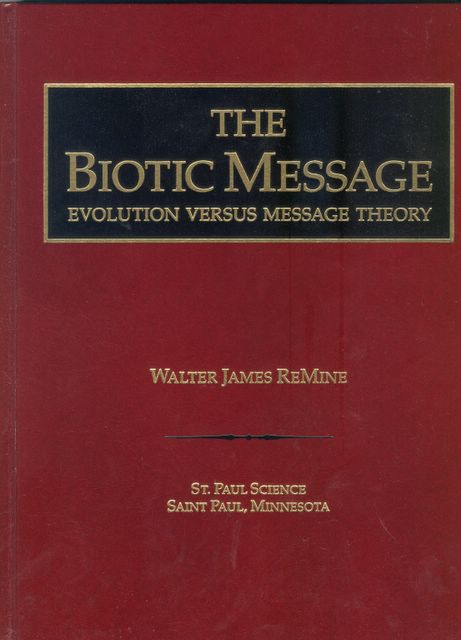
(The Biotic Message, By Walter ReMine :116)
That's the best book I have read on the topic, by the way. This section is a little dense I suppose, but the concepts are actually pretty simple. For instance note that this: "Metaphysical explanations are not testable..." is exactly the sort of argument made by the evolutionist above with respect to a supposed "infinite" which supposedly will "inevitably" die into the finite or some such. I have no problem admitting to metaphysical phenomena that can be in "tension" with the physical. But it is not a testable statement in a scientific way and it is odd that he begins a book about "science" with it. "Infinite phenomena" are not Naturalism no matter how many times some half-wits say that their self-refuting arguments are the "foundations of modern biology." I say half-wit because the half of knowing and wit/knowledge that is missing is the metaphysical. It seems to me that the Naturalist's mind may have folded in on itself.
I have not forgotten this:
"...some organic molecules achieved the ability to make more of themselves..."
That's just what molecules do sometimes. They become organic or somethin', perhaps another day.
[Edit: If you do not understand much of this post then leave a question or suggestion.]