Saturday, October 08, 2005

The Judiciary vs. the Executive


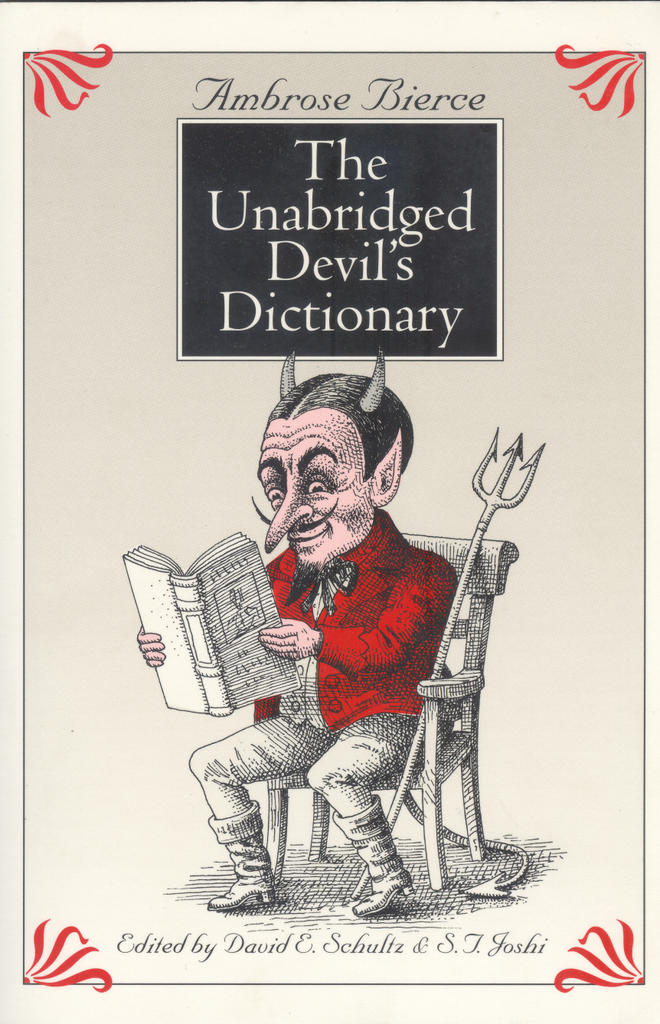
Executive, n. An officer of the Government, whose duty it is to enforce the wishes of the legislative power until such time as the judicial department shall be pleased to pronounce them invalid and of no effect. Following is an extract from an old book entitled, The Lunarian Astonished —Pfeiffer & Co., Boston, 1803:
LUNARIAN: Then when your Congress has passed a law it goes directly to the Supreme Court in order that it may at once be known whether it is constitutional?

TERRESTRIAN: 0h no; it does not require the approval of the Supreme Court until having perhaps been enforced for many years somebody objects to its operation against himself...

LUNARIAN: Ah, the executive power is a part of the legislative. Do your policemen also have to approve the local ordinances that they enforce?

TERRESTRIAN: Not yet—at least not in their character of constables. Generally speaking, though, all laws require the approval of those whom they are intended to restrain.

LUNARIAN: I see. The death warrant is not valid until signed by the murderer.

TERRESTRIAN: My friend, you put it too strongly; we are not so consistent.

LUNARIAN: But this system of maintaining an expensive judicial machinery to pass upon the validity of laws only after they have long been executed, and then only when brought before the court by some private person — does it not cause great confusion?

TERRESTRIAN: It does.

LUNARIAN: Why then should not your laws, previously to being executed, be validated, not by the signature of your President, but by that of the Chief Justice of the Supreme Court?

TERRESTRIAN: There is no precedent for any such course.

LUNARIAN: Precedent. What is that?

TERRESTRIAN: It has been defined by five hundred lawyers in three volumes each. So how can any one know?

(The Unabridged Devil's Dictionary
By Ambrose Pierce :73-74)

Friday, October 07, 2005

Don't throw lemons around in India...

HYDERABAD, India (AP) - Indian police arrested 67 women on Wednesday after a mob killed a barber suspected of practising black magic, an official said. Dozens more women were being sought by authorities.

The arrests came after the mob of about 150 women from the south Indian village of Muddireddypalli attacked the shop of a barber named Parvathalu on Tuesday, beating him and locking him inside before setting the building on fire, said C. Satyanarayana, a district official.

The villagers suspected he was practising black magic and held him responsible for the large number of deaths in the village in the past year, he said.

The attack was prompted by the death of another woman earlier this week, the official said.

The barber was suspected of sorcery because "he was seen throwing lemons here and there," Satyanarayana said.

He gave no details, but many villagers in this part of India believe lemons are used in black magic.
(CNews)

There is a modern myth that witch hunts presumed to take place in the Dark Ages represent why Christianity is wrong, superstitious or part of the Dark Ages. It is a myth because historical facts demonstrate that witch hunts decreased under the influence of Christianity, even under the deformed Christianity of the Inquisition. So as the Inquisition took control, the amount of witch hunting decreased. The modern mind has been so shaped by propaganda with respect to the Dark Ages and then the great Enlightenment that simple historical facts go against its grain.

At any rate, the story above is the same old story about women getting hysterical and hysteria becoming the motivation for superstition. Mentioning a gendered pattern with respect to feminine hysteria goes against some current emotional conditioning and propaganda but the simple fact is, sometimes women get hysterical and men either stand by or join in. The evil that women tend to is different from the evil that men tend to.

Some history:
If the witches are the tragic heroines of the story of witch-hunting, the villain of the piece is the church, often appearing in the guise of the Inquisition. We are told that throughout Europe priests and Puritans alike sought out women to torture and execute. “The church of Rome. . . strained every nerve to stimulate the persecutions,” and “the zeal of the ecclesiastics was unflagging. In fact, recent research has shown that far from “stimulating the persecutions,” the church, whether Catholic or Protestant, often had a moderating effect. If we recall the social context of prosecutions, this becomes less surprising than it appears at first sight.

Witches did not usually face the bizarre accusations beloved of the orthodox story. Rather than congress with demons, naked dancing or broomstick flying, the charges were more likely to concern ordinary village life: the failure of crops, missing clothes and commonplace jealousies. As a result, most prosecutions were lay, not religious, initiated not by “ecclesiastics” concerned with esoteric issues of theology but by women worried about their families.

The Roman Catholic Church and the Inquisition.

Carl Sagan’s picture of the Inquisition going from village to village in its hunt for elderly women has become less popular among scholars as the role of native villagers and lay authorities has been uncovered....

(Six Modern Myths About
Christianity & Western Civilization
By Philip J. Sampson :138)

If you ever converse with a Wiccan they may mention the Burning Times. That is a postmodernist myth overlayed on the various modernist myths written by progressives like Sagan. Ironically, it would seem that if anything causes people to get burned to death it is the superstition and hysterical babeling that comes about when Wisdom is changed to Wicca. Yet most Wiccans seem to believe a story about the past extrapolated in limitless ways from sensationalistic and exceptional cases in history that are treated as some sort of historical norm. (Although apparently some reject the myths.)

Anyway, don't go throwing lemons around in India...

(Related posts: Witch Hunt)

Thursday, October 06, 2005

Textual Degenerates

The law:
Article I, Section 8. Freedom of speech and press. No law shall be passed restraining the free expression of opinion, or restricting the right to speak, write or print freely on any subject whatever; but every person shall be responsible for the abuse of this right.
(The Oregon Constitution)

The textual degenerates:
The Oregon Supreme Court issued two rulings Thursday that struck down a state law that makes it a crime to, among other things, “direct, manage, finance or present” a “live public show” in which the participants engage in “sexual conduct.” One ruling overturned the conviction of a Roseburg adult business owner who offered private sex shows to paying customers. The other ruling invalidated a city of Nyssa ordinance requiring nude dancers to stay at least four feet away from customers. Writing for the majority of the court, state Supreme Court Justice Michael Gillette said the law violates the state’s constitutional free speech guarantees, saying it “appears to us to be beyond reasonable dispute that the protection extends to the kinds of expressions that a majority of the citizens in many communities would dislike.” In a dissent, Justice Paul de Muniz unsuccessfully argued that the drafters of the Oregon Constitution did not intend to protect “masturbation and sexual intercourse in a ‘live public sex show.’ ”
(Portland Tribune)

This sort of pattern is representative of the decadence and then decline of a civilization, as civilization relies on language to rise in the first place it seems to die in the same way. The reason that the Founders maintained the principle of free speech and freedom in text was so that the law/text of the land could be guided and molded by a free dialectic process. It is ironic that this very freedom is now turned against itself so that no one is allowed to make a law about behaviors. Instead the textual degenerate himself will eventually try to make all discriminations for all people about many different things. In his own degeneracy he is the law/text. Ironically, he will not be limited by conceptual principles like the people's free speech as he comes to make all discriminations for them. He can turn speech into anything, so he will come to silence everyone's speech and discriminations except his own. As long as you agree, perhaps you will overlook his degeneracy. Yet there will be none left to speak when you disagree with whatever his whim may be.

Jefferson and others tried to design a system to limit textual degeneracy, yet there is no system that can stand against the decline of a civilization. In the end, there has to be someone in the system willing to be limited and defined by text/law.

The Constitution...meant that its coordinate branches should be checks on each other. But the opinion which gives to the judges the right to decide what laws are constitutional and what not, not only for themselves in their own sphere of action but for the Legislature and Executive also in their spheres, would make the Judiciary a despotic branch.
--Thomas Jefferson to Abigail Adams, 1804

As the textual degenerate undermines all of our language eventually no one can say, write or print anything about it.

Try thinking without words and you'll get a sense of the degenerate's delusion in how he thinks that he is thinking what he is feeling. All he is, is bundle of emotional conditioning which he will project onto others. His type of "free speech" or supposed adherence to any other concept or principle limiting visceral reaction or emotional conditioning are equally illusory and irrational. Did you ever notice that Orwell's protagonist against Big Brother begins to think about and understand Liberty as he begins to write? Write that down...
Short video


This video is from the same day as before, good speed, the jibe should be smoother and retain speed better than that one. It's something to work on. (8.6MB)

(Note that videos in old posts are removed due to limited space on server.) I need to windsurf this fall. This windsurfer in Maui is just torturing people. (Time for a new sail?)

Wednesday, October 05, 2005

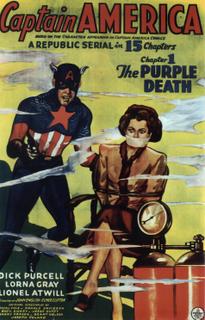
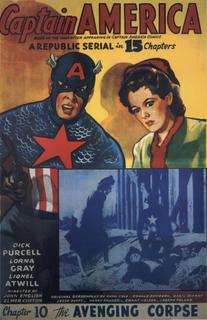
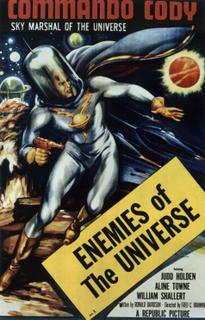
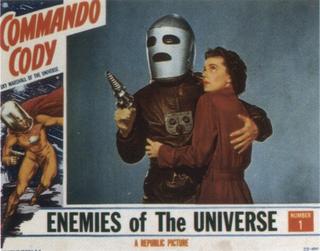
Americana

It's an intellectual wasteland anyway, don't you know.


Hmmm, the old pot on the head effect, some real special effects wizards there...


Whatever happened to the iron claw, they didn't remake it.

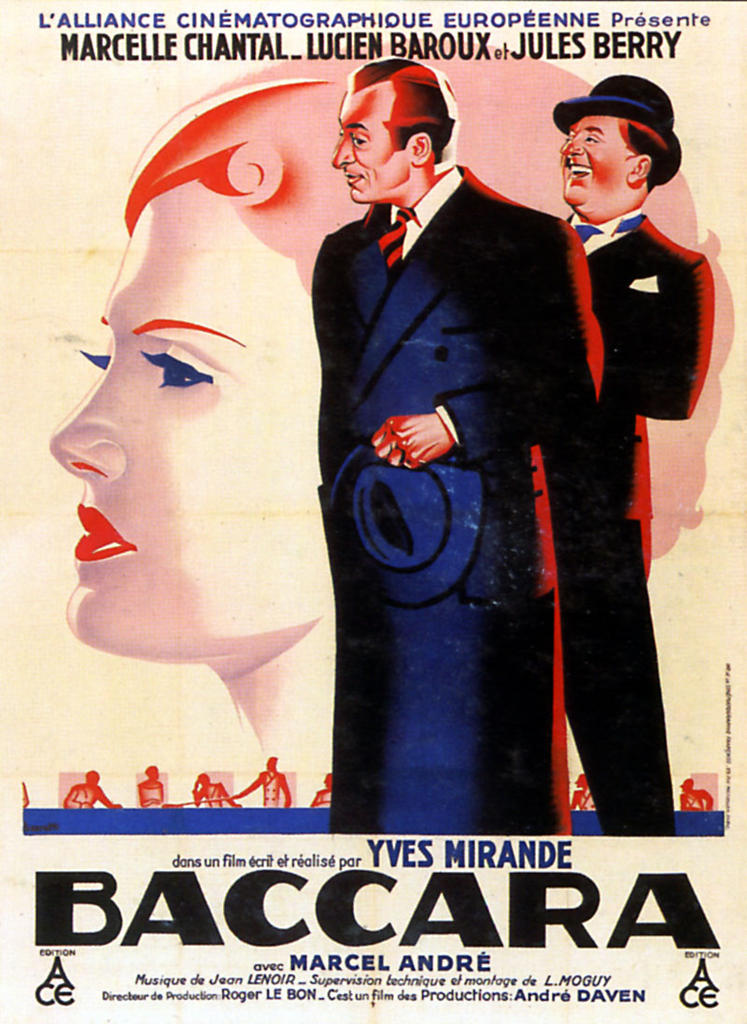
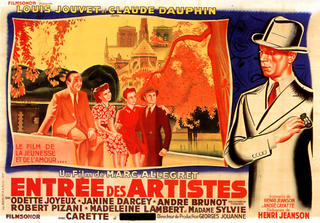
Contrast French film in the 30s:


And these are the ones I could find that had the least to do with angst and tortured romance. I think I'd rather watch Americana going like gang busters and the pot on the head guy instead of artists trying to prove how arty they are. Europeans think that the American belief in heroes is quaint, Americans don't care what Europeans think.

[I might fix the links in this one. Stupid blogger breaks links on some file names and leaves others, hard to know what sets it off.]

Tuesday, October 04, 2005

The Flat Earth

It's an enduring myth that before the Enlightenment people used to think the earth was flat. One would think that progressives would question historians who would record themselves as part of Enlightenment and the ages before them as the Dark Ages, yet they don't. Progressives are typically too busy progressing on to their next mistake to become aware of those they have already made.
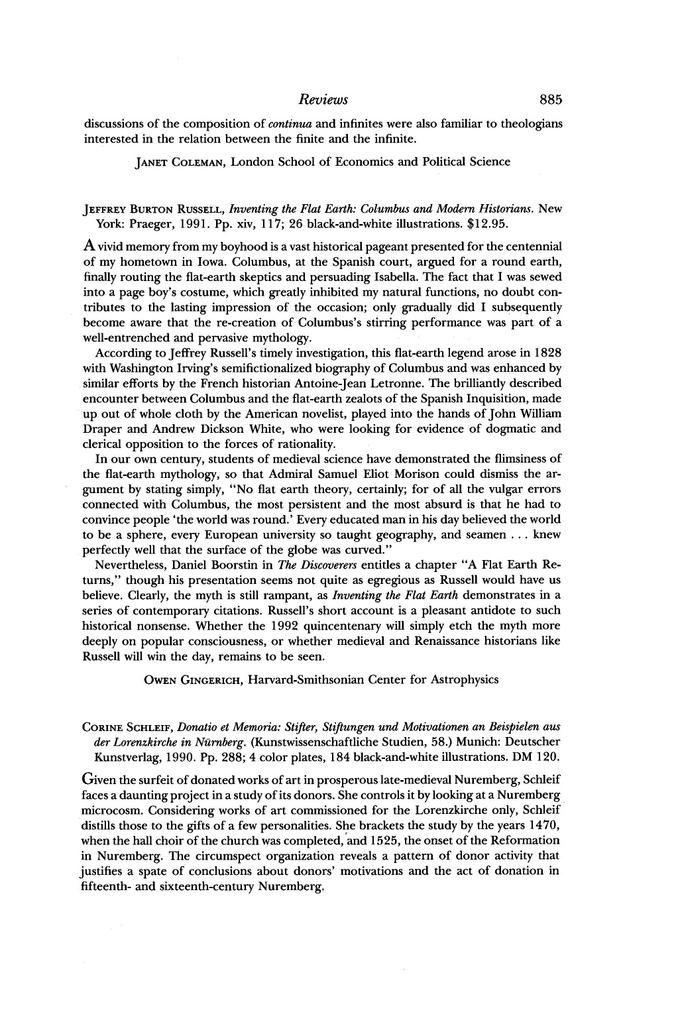
According to Jeffrey Russell’s timely investigation, th[e] flat-earth legend arose in 1828 with Washington Irving’s semifictionalized biography of Columbus and was enhanced by similar efforts by the French historian Antoine-Jean Letronne. The brilliantly described encounter between Columbus and the flat-earth zealots of the Spanish Inquisition, made up out of whole cloth by the American novelist, played into the hands of John William Draper and Andrew Dickson White, who were looking for evidence of dogmatic and clerical opposition to the forces of rationality.

In our own century, students of medieval science have demonstrated the flimsiness of the flat-earth mythology, so that Admiral Samuel Eliot Morison could dismiss the argument by stating simply, “No flat earth theory, certainly; for of all the vulgar errors connected with Columbus, the most persistent and the most absurd is that he had to convince people ‘the world was round.’ Every educated man in his day believed the world to be a sphere, every European university so taught geography, and seamen ... knew perfectly well that the surface of the globe was curved.”

Nevertheless, Daniel Boorstin in The Discoverers entitles a chapter “A Flat Earth Returns,” though his presentation seems not quite as egregious as Russell would have us believe. Clearly, the myth is still rampant, as Inventing the Flat Earth demonstrates in a series of contemporary citations. Russell’s short account is a pleasant antidote to such historical nonsense.
(Reviewed: Inventing the Flat Earth: Columbus and
Modern Historians by Jeffrey Burton Russell
Speculum Vol. 68, No. 3 (Jul., 1993), :885)


Myths:
In Galileo's day public opinion largely adhered to the "flat-earth" view taught by the Church and few were willing to risk death by openly challenging biblical writings with scientific analysis. We now know the public's view was all wrong, but public opinion is understandably susceptible to error. In the past 400 years some things haven't changed. A few members of the Dover School Board have recently called for the teaching of biblical creationism as part of the high school's biology curriculum. Despite U.S. Supreme Court rulings that creationism is not science and thus, teaching it violates the constitutional separation of Church and State, the creationism proponents want it taught along side the Darwinian theory of evolution anyway.

(The York Dispatch (York, PA)
June 18, 2004 Friday Section: Letters
Headline: Creationism has problems
By Steven G. Zorbaugh)

The bad thing about progressives is that they are ignorant people who think that they know something. There are three or four myths in that letter, which is typical, and murmuring about science, science...cannot change historical facts. The interesting thing is that people seem to be learning progressive or Leftist myths from American professors who are supposed to engage in critical thinking enough to know better.