A blogging note, I have been keeping Right2Leftists updated more now.
Update,
I wrote over there instead of here today.
Sunday, February 27, 2005

Saturday, February 26, 2005
Progressives and Marriage
"Tendencies fostered by the modern social organism are injuring the race, in the opinion of Prof. Keller, and invite a natural retribution....
War itself, once a valuable selective agency, exposes the strongest and the fleetest to the bomb and the bullet, to the diseases and temptations of military service, to irregular habits, delayed marriage, and diminished families. The confinements of the industrial organization kill off the biologically fitter.
....Even the development of medicine, hygiene, and dietetics rears to maturity fathers of weakly families who might have fallen early beneath the scythe of natural selection.
....a new set of marriage taboos may gain vogue for the production of a race of superior beings."
(Folk Ways and Eugenics
The New York Times; Aug 14, 1908 pg. 6)
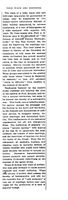
It seems to me that the progressive university professors (in that case, one from Yale) and the like have always had a certain tendency, a tendency based on Naturalism to undermine traditional marriage. It is so common that one might almost think that there was some ancient covenant based on marriage at issue. The progressive eugenics movement wanted to create a "...new set of marriage taboos..." then, and progressives now would exchange venerated tradition and valid taboos for same-sex marriage based on the latest pseudo-scientific nonsense. The other day I was thinking, since SSM seems to be such "The Issue" for them at this point ins history, that which brings ought the censorious side of Leftist bigots, that it would be easy to just avoid it. I have been censored off of two Leftist blogs based on this issue. But I think it was Luther who said that one can support all the points of the truth, except that one which is the one currently under attack, and so be lending a tacit support to evil. It is an evil to purposefully deny children their father/fathering and mother/mothering just to support the latest pseudo-scientific vogue of "progressives." What "progress" they seem to want to make in denial of Romance, Covenant and millenia of moral teachings. These progressives seem more like regressives, preaching a reversion to subpagan hedonism (the modern SSM) or tribalism (the old Eugenics). Each one is the issue of the day, in its time. Yet how quickly Eugenics is to be forgotten in exchange for the latest regressive vogue.
War itself, once a valuable selective agency, exposes the strongest and the fleetest to the bomb and the bullet, to the diseases and temptations of military service, to irregular habits, delayed marriage, and diminished families. The confinements of the industrial organization kill off the biologically fitter.
....Even the development of medicine, hygiene, and dietetics rears to maturity fathers of weakly families who might have fallen early beneath the scythe of natural selection.
....a new set of marriage taboos may gain vogue for the production of a race of superior beings."
(Folk Ways and Eugenics
The New York Times; Aug 14, 1908 pg. 6)
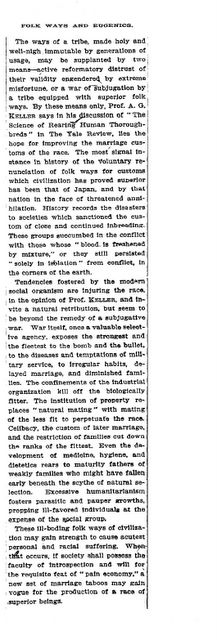
It seems to me that the progressive university professors (in that case, one from Yale) and the like have always had a certain tendency, a tendency based on Naturalism to undermine traditional marriage. It is so common that one might almost think that there was some ancient covenant based on marriage at issue. The progressive eugenics movement wanted to create a "...new set of marriage taboos..." then, and progressives now would exchange venerated tradition and valid taboos for same-sex marriage based on the latest pseudo-scientific nonsense. The other day I was thinking, since SSM seems to be such "The Issue" for them at this point ins history, that which brings ought the censorious side of Leftist bigots, that it would be easy to just avoid it. I have been censored off of two Leftist blogs based on this issue. But I think it was Luther who said that one can support all the points of the truth, except that one which is the one currently under attack, and so be lending a tacit support to evil. It is an evil to purposefully deny children their father/fathering and mother/mothering just to support the latest pseudo-scientific vogue of "progressives." What "progress" they seem to want to make in denial of Romance, Covenant and millenia of moral teachings. These progressives seem more like regressives, preaching a reversion to subpagan hedonism (the modern SSM) or tribalism (the old Eugenics). Each one is the issue of the day, in its time. Yet how quickly Eugenics is to be forgotten in exchange for the latest regressive vogue.
Men and Women...
Karl Kraus,
"At some time in the world there must have been an immaculate conception of voluptuousness!"
"He forced her to do her bidding."
(Karl Kraus, Half-Truths and
One-and-a-Half-Truths :103, 106)

Nietzsche,
"After a quarrel between a man and a woman, one suffers most at the idea of having hurt the other, while the other suffers most at the idea of not having hurt the other enough, from which follow the tears, sobs and distracted mien through which the heart of the other is to be made heavy even after the quarrel is over."
(Human, All Too Human: A Book for Free Spirits (Cambridge U. Press: 1996) Translated by R.J. Hollingdale :155-156)
"At some time in the world there must have been an immaculate conception of voluptuousness!"
"He forced her to do her bidding."
(Karl Kraus, Half-Truths and
One-and-a-Half-Truths :103, 106)
Nietzsche,
"After a quarrel between a man and a woman, one suffers most at the idea of having hurt the other, while the other suffers most at the idea of not having hurt the other enough, from which follow the tears, sobs and distracted mien through which the heart of the other is to be made heavy even after the quarrel is over."
(Human, All Too Human: A Book for Free Spirits (Cambridge U. Press: 1996) Translated by R.J. Hollingdale :155-156)
That's annoying...a little about the radio and technology.
...the radio station I usually listen to was broadcast over by some new hip-hop station. So now most of what is on it is 50Cent saying he likes women like a fat kid likes cake, take him to the candy shop, he wishes he had mint now, etc. It's all quite the masterful use of metaphors. The depth is amazing: "Me like candy." "Me no like not having candy."
But anyway, beginning to criticize one genre or another is not the point of this post. The point is that radio is still running on 1950s technology thanks to the government. The bandwidth being used could actually trasmit about eight more stations, or even more, if the bits were used more efficiently. With respect to radio, the government is like a protectionist system for the polluters or the gas guzzlers of the Information Age. I.e., those who make terribly inefficient use of broadcast bandwidth, the natural resource being used. I'll try to explain things for the non-technical, if you are still bothering to read this. This one is probably for geeks.
bandwidth is:
1 : a range within a band of wavelengths, frequencies, or energies; especially : a range of radio frequencies which is occupied by a modulated carrier wave, which is assigned to a service, or over which a device can operate
As far as radio, the bandwidth involved is a portion of the electromagnetic spectrum being used and misused. Misused because the situation with respect to broadcasting on the spectrum is analogous to people being in a room of limited space all trying to shout over each other instead of modulating their tone and voice so that each one can be heard and have a conversation. Thus, now there is a new hip-hop station here instead of the other station. The government helps to sponsor the situation because it auctions off the spectrum in blocks based on 1950s technology, there is no incentive to use it more efficiently with new technologies. One technology that most people have at least heard of is MP3. That is a rather old audio technology originally developed by the Fraunhoffer institute. It's a codec, a coding/decoding algorithm. It works in pretty simple ways by removing portions of the audio that are in inaudible regions of its spectrum, at least to the human ear. That alone saves a lot of space. Then it also uses psycho-acoustic masking tricks like useing less bits for a high portion of the audio while there is a booming bass part. If all goes well you will never hear the difference. But if there is not enough bitrate to use then you may hear a warble or "flanging" in the high portions.
If there was any incentive for an efficient use of bandwidth in the case of radio then such algorithms and codecs could be used.
"....using digital signal processors, a radio can be made to disassemble a stream of data fed into it from a source. It can be made to do this right down to the sub-byte level - bundle it into tiny packets of data, and transmit those packets in short bursts in random ways over a wide range of frequencies. . . .
This can be done at low levels of power, while a corresponding radio at the other end, using the same proprietary algorithms used by the first radio, can capture and
analyze those packets, re-assemble them perfectly, and feed them into a receiving system or network.
Secondly, error-correcting techniques possible for digital signaling can even deal robustly with the interference that does occur. If a great deal of interference occurs, the usual effect is the slowing down (from retrying to get the signal through perfectly) of the rate of data exchange, not its complete failure. . . . .
In other words, spread spectrum, using frequency hopping techniques can co-exist with other radios using the same frequencies or bands. In fact there can be 'spectrum sharing' to such a degree that it is no longer necessary for the FCC to award licenses to just one transmitting entity operating in an area. There still have
to be rules, of course, but very different rules, for this new era of digital radio."
(David R. Hughes, The Case for Shared
Wireless Public Spectrum)
Inefficiency and waste becomes important politically because Leftists tend to favor something called the "fairness doctrine." Because the resource is supposedly scarce (And thanks to the governments way of auctioning it off, it probably always will be "scarce.") we have to be "fair" in its usage. In other words, what you talk about is going to be policed.
Instead of efficiency, here is what we have. An analogy using the natural resource of audible airtime:
"You are at a crowded party. As is typical of parties, many people are carrying on conversations at once, and the air is full of noise. In fact, you are having trouble hearing what other people are saying due to the din. Suddenly, the door opens,
and several federal agents appear, badges in hand. "Your attention please," their leader says sternly. "Because so many people are talking too loud, causing others to have trouble hearing their own conversations, the newly-established Federal Speech Commission will now exercise its plenary authority to regulate conversations. Since some of you are having trouble hearing each other, we decree that in order for anyone to have a conversation for the rest of the night, you must first get our permission--and we will base our permission on whether you can convince us that your planned conversational topic is indeed worthy of discussion (after all, sound waves are scarce, and we wouldn't want anyone wasting perfectly good sound waves on chit-chat). Furthermore, we will not allow any improper language, and we would appreciate your efforts to talk about serious subjects such as philosophy, politics or foreign affairs. Thank you for your attention, and you can begin lining up to get permission to talk."
As time went on, everyone got accustomed to the Federal Speech Commission, and its officious regulation of any and all party conversations. Before long, however, a few people had a bright idea. Instead of having the FSC representatives decide on who got to speak and when, why not allow the people themselves to decide as long as they bought the right to do so? That is, let the FSC sell off the right to speak at parties, and whoever wanted most to speak could simply bid the highest. It would make money for the government, and would encourage economic efficiency. It also seemed like a step towards personal freedom.
Of course, since sound waves were scarce, and since the FSC still had authority to regulate and allocate the right to talk, it would be necessary to have restrictions on the subjects that could be discussed, or the language that could be used, or on the number of talkers allowed at any one time. And despite the FSC's admirable purpose, something seemed faintly amiss about the government selling the right to speak, whether at parties or elsewhere. No one ever seemed to consider how it was that the government could claim the right to sell speakers' licenses in the first place. Nevertheless, the auction idea took off, and the FSC busied itself with raising exorbitant amounts of money thereby."
(Leland Stanford Junior University
Stanford Technology Law Review
2002 Stan. Tech. L. Rev. 2
Replacing Spectrum Auctions with a Spectrum Commons
Stuart Buck)
To the non-techies, I apologize...anyhow, those are some of the reasons that one radio station is broadcasting over another one.
But anyway, beginning to criticize one genre or another is not the point of this post. The point is that radio is still running on 1950s technology thanks to the government. The bandwidth being used could actually trasmit about eight more stations, or even more, if the bits were used more efficiently. With respect to radio, the government is like a protectionist system for the polluters or the gas guzzlers of the Information Age. I.e., those who make terribly inefficient use of broadcast bandwidth, the natural resource being used. I'll try to explain things for the non-technical, if you are still bothering to read this. This one is probably for geeks.
bandwidth is:
1 : a range within a band of wavelengths, frequencies, or energies; especially : a range of radio frequencies which is occupied by a modulated carrier wave, which is assigned to a service, or over which a device can operate
As far as radio, the bandwidth involved is a portion of the electromagnetic spectrum being used and misused. Misused because the situation with respect to broadcasting on the spectrum is analogous to people being in a room of limited space all trying to shout over each other instead of modulating their tone and voice so that each one can be heard and have a conversation. Thus, now there is a new hip-hop station here instead of the other station. The government helps to sponsor the situation because it auctions off the spectrum in blocks based on 1950s technology, there is no incentive to use it more efficiently with new technologies. One technology that most people have at least heard of is MP3. That is a rather old audio technology originally developed by the Fraunhoffer institute. It's a codec, a coding/decoding algorithm. It works in pretty simple ways by removing portions of the audio that are in inaudible regions of its spectrum, at least to the human ear. That alone saves a lot of space. Then it also uses psycho-acoustic masking tricks like useing less bits for a high portion of the audio while there is a booming bass part. If all goes well you will never hear the difference. But if there is not enough bitrate to use then you may hear a warble or "flanging" in the high portions.
If there was any incentive for an efficient use of bandwidth in the case of radio then such algorithms and codecs could be used.
"....using digital signal processors, a radio can be made to disassemble a stream of data fed into it from a source. It can be made to do this right down to the sub-byte level - bundle it into tiny packets of data, and transmit those packets in short bursts in random ways over a wide range of frequencies. . . .
This can be done at low levels of power, while a corresponding radio at the other end, using the same proprietary algorithms used by the first radio, can capture and
analyze those packets, re-assemble them perfectly, and feed them into a receiving system or network.
Secondly, error-correcting techniques possible for digital signaling can even deal robustly with the interference that does occur. If a great deal of interference occurs, the usual effect is the slowing down (from retrying to get the signal through perfectly) of the rate of data exchange, not its complete failure. . . . .
In other words, spread spectrum, using frequency hopping techniques can co-exist with other radios using the same frequencies or bands. In fact there can be 'spectrum sharing' to such a degree that it is no longer necessary for the FCC to award licenses to just one transmitting entity operating in an area. There still have
to be rules, of course, but very different rules, for this new era of digital radio."
(David R. Hughes, The Case for Shared
Wireless Public Spectrum)
Inefficiency and waste becomes important politically because Leftists tend to favor something called the "fairness doctrine." Because the resource is supposedly scarce (And thanks to the governments way of auctioning it off, it probably always will be "scarce.") we have to be "fair" in its usage. In other words, what you talk about is going to be policed.
Instead of efficiency, here is what we have. An analogy using the natural resource of audible airtime:
"You are at a crowded party. As is typical of parties, many people are carrying on conversations at once, and the air is full of noise. In fact, you are having trouble hearing what other people are saying due to the din. Suddenly, the door opens,
and several federal agents appear, badges in hand. "Your attention please," their leader says sternly. "Because so many people are talking too loud, causing others to have trouble hearing their own conversations, the newly-established Federal Speech Commission will now exercise its plenary authority to regulate conversations. Since some of you are having trouble hearing each other, we decree that in order for anyone to have a conversation for the rest of the night, you must first get our permission--and we will base our permission on whether you can convince us that your planned conversational topic is indeed worthy of discussion (after all, sound waves are scarce, and we wouldn't want anyone wasting perfectly good sound waves on chit-chat). Furthermore, we will not allow any improper language, and we would appreciate your efforts to talk about serious subjects such as philosophy, politics or foreign affairs. Thank you for your attention, and you can begin lining up to get permission to talk."
As time went on, everyone got accustomed to the Federal Speech Commission, and its officious regulation of any and all party conversations. Before long, however, a few people had a bright idea. Instead of having the FSC representatives decide on who got to speak and when, why not allow the people themselves to decide as long as they bought the right to do so? That is, let the FSC sell off the right to speak at parties, and whoever wanted most to speak could simply bid the highest. It would make money for the government, and would encourage economic efficiency. It also seemed like a step towards personal freedom.
Of course, since sound waves were scarce, and since the FSC still had authority to regulate and allocate the right to talk, it would be necessary to have restrictions on the subjects that could be discussed, or the language that could be used, or on the number of talkers allowed at any one time. And despite the FSC's admirable purpose, something seemed faintly amiss about the government selling the right to speak, whether at parties or elsewhere. No one ever seemed to consider how it was that the government could claim the right to sell speakers' licenses in the first place. Nevertheless, the auction idea took off, and the FSC busied itself with raising exorbitant amounts of money thereby."
(Leland Stanford Junior University
Stanford Technology Law Review
2002 Stan. Tech. L. Rev. 2
Replacing Spectrum Auctions with a Spectrum Commons
Stuart Buck)
To the non-techies, I apologize...anyhow, those are some of the reasons that one radio station is broadcasting over another one.
Friday, February 25, 2005
The Story of the Atheist, Continued...
Continuing...
"...information is invisible."
"Yes, it is only a formation that is the visible manifestation of information. I think that is the difference between sight and insight as well. In some sense, it seems that some people have insight and others do not. The other day an agnostic sort of fellow who apparently could not refute a bit of something I wrote, wrote back to me, 'Just because you can put something together in a string of words does not make it true.' First thing, why did he bother to write that string of words? Are they untrue? I think that some people have a rebellious will, is all. And so the truth can be represented to them in something as plain as the schematics of mathematics and yet they would seek to deny it, even as they refute themselves in their own denials. As to that fellow, I doubt he would deny the important truths represented by strings of symbols, signs and code if his own genetic code was at issue. His own information that has to do with his own formation, DNA. Again, it is like any relativist who do not and cannot live by their own denials of basic self-evident truths, evident in the Self. That is why they keep refuting their Selves. Yet the denial itself is revealing."
"But....information isn't really invisible, as God supposedly is. I suppose you believe it exists when it is not manifested or information takes a 'formation' as you put it. But I think that formation, that we observe, is all that is. You see, it's simple, existence is. So I'll believe in God when he takes 'form' and comes to dinner."
"I suppose it is too bad you did not live at a certain times when the Bible says that God took form."
"I don't believe in the Bible...oh, right. Okay, so the Bible says it and you like to refer to the Bible as such, instead of our own beliefs about it. The text does say that, but that does not mean that it is true."
"I don't know that you ought to believe that any text or code at all is true to maintain a consistent existential philosophy. You see, text almost crosses the line with all its tittles and jots to being the nonphysical information. It's the same with the schematics of mathematics. I'm not saying that such code actually does cross that line, as obviously it still has its physical manifestation on paper, patterns of pixels on a screen and so on. Yet it is getting pretty close. And your sort of existential focus on our current existence in a denial of the essential seems to reduce libraries down to what is, a you put it. In other words, books are reduced to wood pulp with some markings on them. Unfortunately, there are not words to put into other words if that is the case. The pattern or design of the marks, what of it? The physical is existence..."
"I suppose I do believe in some of the 'essential,' as you put it. I'm not prepared to run off into some Platonic world of the Forms, though. Yet yes, I do believe that information is invisible and only formation the visible, as you have been arguing. So I agree with what some of what you would call the essential, a sort of unseen essence that is nonphysical. Am I supposed to call that God? Is that theism? That's not theism. Besides that, my empirically based criticism and demand for observation remains because we must use the visible formation to judge information. Come to think of it, that's the point of science. So you can see why I would note that God ought to come to dinner, then by observation I could know."
(I will continue this, maybe later today. But if someone wants to hop in and help the theist here before I write some more dialogue, go ahead and give it a go.)
Perhaps the theist says,
"Maybe, you do not exist in the way you think you do. Perhaps I am a superior being and you are just a rhetorical device being used by my own more infinite mind to communicate to others of my superior kind. So you are just my words to them. That's why I created you."
"What?! What empirical observations can you make to support your claim? Hmmm?"
"Well, I suppose I could say to my own rhetorical device, 'Dance my atheist, dance!'"
"What the....? I, uh...why am I dancing?! Something is not right here!"
"Dance...and now, prance! I think I will keep you around, as you're quite an entertaining fellow!"
"...information is invisible."
"Yes, it is only a formation that is the visible manifestation of information. I think that is the difference between sight and insight as well. In some sense, it seems that some people have insight and others do not. The other day an agnostic sort of fellow who apparently could not refute a bit of something I wrote, wrote back to me, 'Just because you can put something together in a string of words does not make it true.' First thing, why did he bother to write that string of words? Are they untrue? I think that some people have a rebellious will, is all. And so the truth can be represented to them in something as plain as the schematics of mathematics and yet they would seek to deny it, even as they refute themselves in their own denials. As to that fellow, I doubt he would deny the important truths represented by strings of symbols, signs and code if his own genetic code was at issue. His own information that has to do with his own formation, DNA. Again, it is like any relativist who do not and cannot live by their own denials of basic self-evident truths, evident in the Self. That is why they keep refuting their Selves. Yet the denial itself is revealing."
"But....information isn't really invisible, as God supposedly is. I suppose you believe it exists when it is not manifested or information takes a 'formation' as you put it. But I think that formation, that we observe, is all that is. You see, it's simple, existence is. So I'll believe in God when he takes 'form' and comes to dinner."
"I suppose it is too bad you did not live at a certain times when the Bible says that God took form."
"I don't believe in the Bible...oh, right. Okay, so the Bible says it and you like to refer to the Bible as such, instead of our own beliefs about it. The text does say that, but that does not mean that it is true."
"I don't know that you ought to believe that any text or code at all is true to maintain a consistent existential philosophy. You see, text almost crosses the line with all its tittles and jots to being the nonphysical information. It's the same with the schematics of mathematics. I'm not saying that such code actually does cross that line, as obviously it still has its physical manifestation on paper, patterns of pixels on a screen and so on. Yet it is getting pretty close. And your sort of existential focus on our current existence in a denial of the essential seems to reduce libraries down to what is, a you put it. In other words, books are reduced to wood pulp with some markings on them. Unfortunately, there are not words to put into other words if that is the case. The pattern or design of the marks, what of it? The physical is existence..."
"I suppose I do believe in some of the 'essential,' as you put it. I'm not prepared to run off into some Platonic world of the Forms, though. Yet yes, I do believe that information is invisible and only formation the visible, as you have been arguing. So I agree with what some of what you would call the essential, a sort of unseen essence that is nonphysical. Am I supposed to call that God? Is that theism? That's not theism. Besides that, my empirically based criticism and demand for observation remains because we must use the visible formation to judge information. Come to think of it, that's the point of science. So you can see why I would note that God ought to come to dinner, then by observation I could know."
(I will continue this, maybe later today. But if someone wants to hop in and help the theist here before I write some more dialogue, go ahead and give it a go.)
Perhaps the theist says,
"Maybe, you do not exist in the way you think you do. Perhaps I am a superior being and you are just a rhetorical device being used by my own more infinite mind to communicate to others of my superior kind. So you are just my words to them. That's why I created you."
"What?! What empirical observations can you make to support your claim? Hmmm?"
"Well, I suppose I could say to my own rhetorical device, 'Dance my atheist, dance!'"
"What the....? I, uh...why am I dancing?! Something is not right here!"
"Dance...and now, prance! I think I will keep you around, as you're quite an entertaining fellow!"
Subscribe to:
Posts (Atom)